

7 Ways to Extend LED Tube Light Battery Runtime on Set
Last Updated: November 14, 2026
Quick Summary
You extend LED tube battery runtime by dimming to the lowest usable output, switching tubes off between setups, rotating spare charged grips, shading tubes from direct sun, and adding an external power source so the internal cell becomes backup. Measure each tube's actual draw with a power meter, since runtime equals battery watt-hours divided by real power consumption, not the spec sheet.
- A 77Wh grip pulling 15W at full output gives roughly five hours of runtime.
- Plan for 80% of calculated runtime to cover cold weather, aged cells, and long takes.
- The Astera Runtime Extender connects V-mount or Gold Mount packs to two Titan or Helios Tubes per plate.
- Store tubes and packs cool and dry, avoid full discharge, and label packs with a purchase date.
- Mixing plate mounts is the most common compatibility mistake; a Gold Mount pack will not seat on a V-mount plate.
Table of Contents
- Why LED Tube Light Battery Runtime Falls Short on Set
- LED Tube Light Battery Life: What Actually Drains a Tube
- LED Tube Brightness and Battery Life: The Trade-Off Nobody Measures
- 7 Ways to Extend Runtime on Existing LED Tubes
- Using a Film Lighting Battery Runtime Calculator
- LED Tube Battery Charging and Storage Practices That Preserve Capacity
- Safety and Emergency Lighting Compliance for Battery Tube Setups
- Choosing the Right Runtime Extender for Your Kit
- Frequently Asked Questions
Why LED Tube Light Battery Runtime Falls Short on Set
LED tube battery runtime extenders solve a simple problem: the tube you bought for portability runs out of power faster than the shot list allows.
The cause is rarely a faulty battery. It is the gap between the spec-sheet runtime and the runtime you actually get, driven by brightness, temperature, cell age, and charging habits.
Below, we break down what drains a tube, give you seven ways to stretch runtime on gear you already own, and show you how to do the math before you leave the shop.
LED Tube Light Battery Life: What Actually Drains a Tube
LED tube light battery life comes down to two things: how much energy the battery holds, and how fast the tube spends it. Most shooters only think about the first. The second is where the surprises live.
Battery capacity, watt-hours and the 18650 cell
Battery capacity is measured in watt-hours (Wh). A watt-hour is one watt of draw for one hour. That number, not the marketing claim on the box, tells you what the tube can do.
Many LED tubes run on 18650 lithium cells, the same cylindrical cell used in laptop packs and flashlights. A swappable grip often holds a small cluster of these.
Wattage, LED driver efficiency and power consumption
Wattage is the draw: a tube at full output pulls more watts than the same tube dimmed to half. The LED driver converts battery voltage into the current the LEDs need, and that conversion is never perfect, some energy becomes heat.
So the real formula is simple: runtime estimate = battery watt-hours ÷ actual power consumption. A 77Wh grip pulling 15W at your chosen brightness gives roughly five hours; dim to half and you roughly double it.
LED Tube Brightness and Battery Life: The Trade-Off Nobody Measures
LED tube brightness and battery life pull against each other, and almost nobody measures the curve. Crews set a tube to full because it looks right on monitor, then wonder why the battery dies before lunch. Here is a repeatable test protocol you can run on your own tubes in about an hour.
Why the curve is not linear
A tube's LED driver does not spend power in a straight line with output. At full output the driver and LEDs run hot, and heat raises internal resistance, so a slice of every watt-hour becomes heat rather than light.
Color temperature and effects also move the draw. Warmer or cooler settings change the mix of LED channels the driver fires, and wireless or effects modes keep a radio and control circuit awake even when the tube is dim.
A repeatable runtime test protocol
Run this on one tube per model before a shoot week. You need a fully charged grip, a power meter that reads watts, a timer, and a notebook or tape label.
- Charge the grip to full and let it rest 30 minutes so the cells settle.
- Set the tube to the first brightness level you plan to use and note the color temperature and any effects mode.
- Measure the draw with the power meter at the battery connection, or read the tube's own wattage display if it has one. Record the number.
- Run the tube until it shuts down, timing from start to cutoff. Do not top up mid-test.
- Repeat at each brightness level with a fresh full charge between runs, so each result stands alone.
- Write the minutes and measured watts on a tape label on that grip, then transfer the numbers to a master sheet for the kit.
A common pattern is that the measured draw at 50% is not half the full-output draw, because the driver and control circuit keep a floor load.
Reading the trade-off on set
Once you have the curve, choose settings by shot rather than by habit:
- Full output: reserve for hero shots and close key light, where the extra stop is visible on monitor.
- 75% output: the practical default for most setups; the brightness loss is usually recoverable in grade.
- 50% output: background and fill, where the eye rarely notices and the runtime gain is largest per stop lost.
Watch out: a runtime test run in a cold room or with an aged grip will understate what a fresh pack does on a warm set, so label the conditions alongside the minutes and retest after a season of use.
7 Ways to Extend Runtime on Existing LED Tubes
Start with these seven moves, in order of effort.
- Dim to the lowest usable output. Match the monitor, not the spec sheet.
- Use the tube's runtime setting or preset duration if it has one, so it powers down between takes.
- Switch off between setups. Idle tubes drain cells for no reason.
- Keep spare charged grips on the cart and swap rather than wait.
- Shade the tube from direct sun where possible; heat raises draw and shortens cell life.
- Run ballast-free operation checks. Confirm the tube is not fighting an old fixture.
- Add an external power source so the internal cell becomes backup, not primary.
Battery replacement, upgrade and conversion options
When cells age, runtime drops even at the same brightness. Battery degradation is normal: lithium cells lose capacity over hundreds of charge cycles. A tube that ran five hours when new may run three after two hard seasons.
Replacing the grip or cell pack with a fresh one restores much of the original runtime. For crews who want to run tubes off standard camera batteries, the Astera Runtime Extender is a battery plate that connects V-mount or Gold Mount packs to a range of Astera lights, including two Titan Tubes or two Helios Tubes per plate.
That conversion turns your existing camera battery stock into tube power, the single biggest runtime upgrade most kits can make without buying new lights.
External power banks and battery plate compatibility
External power banks and battery plates let a tube run from a larger pack, so the internal cell only covers cable-free moments. Check the plate mount, voltage, and connector before you commit.
For Titan tubes specifically, the Astera Powerbox for Titan Tubes feeds tube power from an external source for longer shoot days. If you are already carrying camera batteries, the Aputure 2 Bay Battery Power Station is another option worth comparing against your existing plate stock.
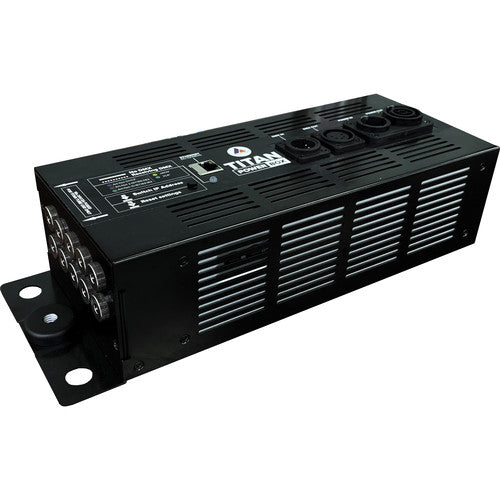
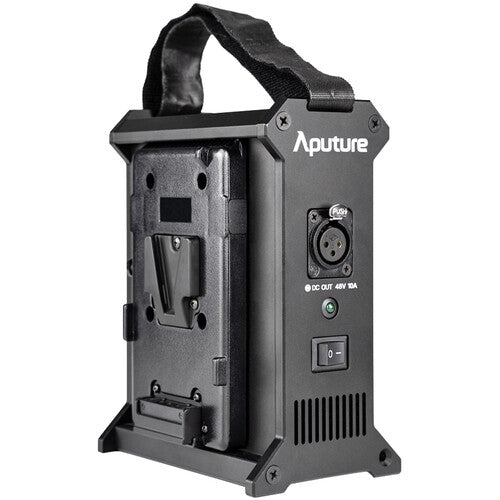
Watch out: mixing plate mounts across a kit is the most common compatibility mistake we see. A Gold Mount pack will not seat on a V-mount plate, and adapters add failure points on a moving set.
Using a Film Lighting Battery Runtime Calculator
A film lighting battery runtime calculator is just the watt-hour formula in a usable form. This section gives you the math, worked examples at several brightness levels, and a systematic method for extending runtime on tubes you already own.
The four inputs that decide runtime
| Input | Where to find it | Why it matters |
|---|---|---|
| Rated battery capacity (Wh) | Printed on the grip or pack label | The starting number, but not the usable number |
| Usable capacity factor | Typically 0.8 to 0.9 for lithium packs | Packs cut off before true empty to protect cells |
| Tube draw at chosen brightness (W) | Spec sheet or a power meter reading | The real load, including driver and control circuit |
| Driver and heat efficiency | Allow roughly 10-15% loss | Conversion and heat turn watt-hours into heat, not light |
Runtime estimate = rated Wh × usable factor ÷ measured draw × efficiency factor.
Worked examples at three brightness levels
Take a grip rated at 77Wh, a usable factor of 0.85, and an efficiency factor of 0.88. The measured draw changes with brightness, so the runtime changes with it:
- Full output, measured 15W: 77 × 0.85 ÷ 15 × 0.88 ≈ 3.8 hours.
- 75% output, measured 12W: 77 × 0.85 ÷ 12 × 0.88 ≈ 4.8 hours.
- 50% output, measured 8W: 77 × 0.85 ÷ 8 × 0.88 ≈ 7.2 hours.
Notice that the 50% setting does not double runtime versus full output, because the driver and control circuit keep a floor load. That is why you measure draw rather than assume it scales with the brightness dial.
Then subtract a safety buffer. A common practice is to plan for 80% of the calculated runtime, to cover cold weather, aged cells, and long takes.
A runtime-extension worksheet for existing tubes
Use this before you buy anything. It turns the formula into a plan for the gear you already own.
- List every tube and grip in the kit with its rated Wh and purchase date.
- Measure draw at the brightness levels you actually use, using the test protocol in the brightness section above.
- Calculate runtime for each tube at each level with the formula, then apply the 80% buffer.
-
Compare total planned runtime to the shoot day length. If the plan falls short, work down this list in order of effort:
- Dim to the lowest usable output and recheck the math.
- Use the tube's runtime setting or preset duration so it powers down between takes.
- Switch off between setups; idle tubes drain cells for no reason.
- Rotate spare charged grips so no single pack carries the day.
- Shade the tube from direct sun where possible; heat raises draw and shortens cell life.
- Add an external power source so the internal cell becomes backup, not primary.
- Label each grip with its measured minutes and the date, so weak packs are visible before they fail on set.
When to move from math to an external source
If the worksheet still falls short after dimming and rotation, the next step is external power. A battery plate that accepts your existing camera battery stock turns those packs into tube power, and an external power box keeps the internal cell as backup for cable-free moments.
Watch out: the box number is an ideal-conditions figure, and a calculator fed with the box number instead of a measured draw will overstate runtime every time.
LED Tube Battery Charging and Storage Practices That Preserve Capacity
LED tube battery charging and storage habits decide how much capacity survives the season. Two crews can buy identical tubes and end up with very different runtime after a year.
Charge fully before a shoot, but do not store cells at full charge for weeks. Lithium cells age faster at high voltage. For gear that sits between jobs, a partial charge is kinder to the cell.
Storage rules we pass to every rental client:
- Store tubes and packs cool and dry, away from vehicle heat
- Avoid full discharge; top up before it hits empty
- Rotate spare grips so no single pack takes every cycle
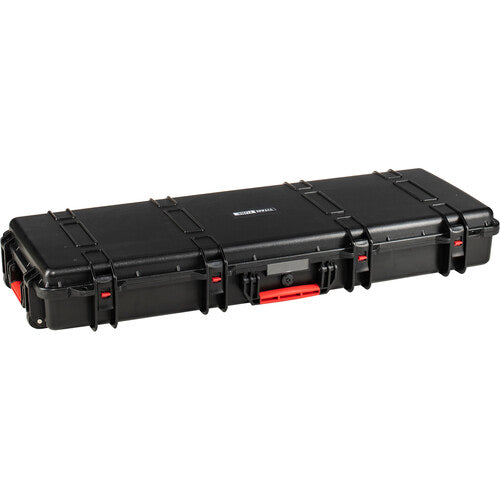
For charging itself, the Astera Charger for Titan or Helios LED Tube Light is the matching charger for those tubes. If you want charging and protection in one place, the Astera Titan Tube Charging Case holds and charges tubes while shielding them in transit.
Safety and Emergency Lighting Compliance for Battery Tube Setups
Battery tube setups touch electrical safety and, in some cases, emergency lighting rules. Treat both seriously.
Any modification that opens a tube, bypasses its driver, or splices a salvaged battery into a fixture voids warranties and creates real risk.
For emergency backup tube use in a studio or venue, check the requirements that apply to your space before you rely on a battery tube as a life-safety light.
Watch out: a tube running on an external pack is not automatically an emergency fixture.
Choosing the Right Runtime Extender for Your Kit
The right LED tube battery runtime extenders depend on what you already own. Match the extender to your battery stock and your tube model, not the other way around.
A simple decision path:
- Already carry V-mount or Gold Mount camera batteries? A battery plate extender gives the best return.
- Running Titan tubes on long days? An external power box keeps the internal cell as backup.
- Small kit, short shoots? A spare swappable grip is the cheapest upgrade.
Buying an extender that does not match your plates wastes money. Measure your kit first, then choose.
Runtime on set is a planning problem, not a luck problem.
Get started with Walter Lighting & Grip and stop losing takes to a dying battery.
Frequently Asked Questions
How long do LED tube lights last on battery power?
Runtime depends on the tube's wattage and the battery's watt-hours. Astera tubes using the RuntimeExtender run off standard camera batteries, so runtime scales with the capacity of the V-mount or Gold Mount battery you attach. Always check the tube's wattage and the battery's watt-hour rating before you plan a shooting day.
Does lowering LED tube brightness increase battery life?
The catch is color temperature: some tubes use separate LED channels for daylight and tungsten, so shifting the color temperature can change draw independently of brightness. Test your specific tube at the settings you plan to shoot before committing to a schedule.
Can an external battery power an LED tube light?
Many professional tubes accept external batteries through a dedicated plate. The Astera RuntimeExtender connects standard V-mount or Gold Mount camera batteries to Titan, Helios and Hyperion tubes, plus HydraPanel, PixelBrick, PlutoFresnel and LeoFresnel fixtures. It costs $270.65 for a single unit, or $969.05 for a set of four in a protective case. Confirm the plate matches your battery mount and that the tube's voltage range falls inside the battery's output before connecting anything.
What should I check if an LED tube's battery drains quickly?
Start with the operating mode: full brightness, high color temperature and always-on emergency settings all raise draw. Then check battery health. Lithium cells lose capacity after repeated full discharges and storage at high charge in warm conditions, so an older pack may hold far less than its label claims. Inspect contacts for corrosion, confirm the charger reaches full voltage, and compare runtime against a known-good battery. If a fresh pack still drains fast, the tube's driver or a failing cell inside the tube is the likely cause.
