

How to Choose Grip Stands for Rental Fleets
Last Updated: November 21, 2026
Quick Summary
Choose grip stands for rental fleets by prioritizing durability under repeated handling, spare-parts availability, and how easily they nest in a truck pack. Build the mix around C-stands for the bulk of the fleet, with a small number of combo stands for height and heavy-fixture requests. Standardize on one or two models per category so spare parts stay interchangeable.
- A practical starting mix is 60% C-stands, 20% turtle base, 15% combo stands, and 5% specialty.
- The sliding leg is the most versatile single purchase because it handles uneven terrain fixed bases cannot.
- Grip heads and locking knobs take the most handling, so check them first on return.
- The Avenger kit's non-welded sliding base lets damaged legs and castings be replaced rather than retiring the stand.
- Inspect stands on return and replace wear parts before returning them to available inventory.
Table of Contents
- What Rental Fleet Managers Need From Grip Stands
- C-Stands for Film Production: The Fleet Backbone
- Combo stands for lighting: When You Need More Height and Load
- Side-by-Side: Five Grip Stand Kits Compared
- Grip Stand Maintenance Checklist for Rental Inventory
- Rental Equipment Fleet Planning: How Many Stands and Which Mix
- Building Your Grip Stand Order With Walter Lighting & Grip
- Frequently Asked Questions
What Rental Fleet Managers Need From Grip Stands
Rental houses manage assets based on the number of cycles a piece of equipment survives before requiring retirement. According to IATSE safety guidelines, equipment failure on set poses significant liability risks, making regular inspection a core operational requirement. For fleet managers, the decision-making process centers on durability under repeated handling, the availability of modular spare parts, and the ability of the hardware to nest efficiently in transport vehicles. A stand that functions well in a showroom but seizes after a season of location work represents a poor return on capital investment.
C-Stands for Film Production: The Fleet Backbone
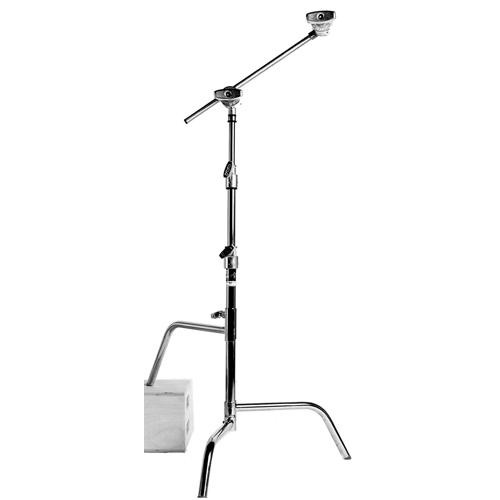
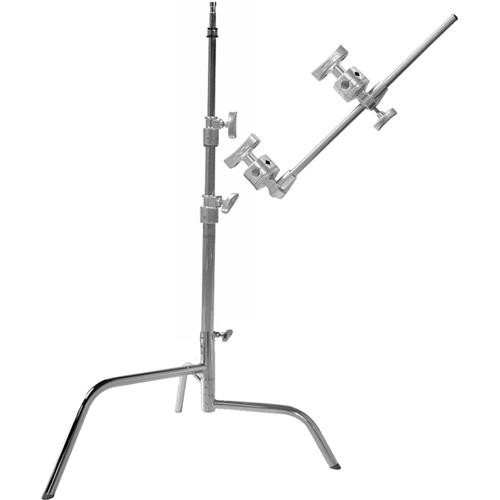
The C-stand remains the primary support tool in any professional grip package. The staggered leg design allows for dense nesting, which is critical when loading production trucks. Most standard fleet C-stands feature a 100 cm arm with a 65 mm grip head, providing a secure hold for flags, scrims, and gobos.
Avoid purchasing kits that lack versatile mounting options. Kits equipped with industry-standard 10 mm and 16 mm mounting holes allow for the attachment of a wider range of modifiers without requiring additional adapters.
Double Riser vs. Sliding Leg vs. Turtle Base
- Double riser: Provides increased working height for overhead flags and large diffusion frames.
- Sliding leg: Features one leg that moves along the riser, allowing the stand to remain level on stairs, uneven terrain, or when placed over an apple box.
- Turtle base: A removable base that detaches from the column, facilitating tighter packing and easier transport.
For most fleets, the sliding leg is the most versatile individual purchase. If you require a sliding-leg configuration, the 20-inch sliding-leg C-stand kit demonstrates the utility of this design on uneven ground. For transport efficiency, the Century C+ turtle base kit is a standard choice for rental inventories.
Combo stands for lighting: When You Need More Height and Load
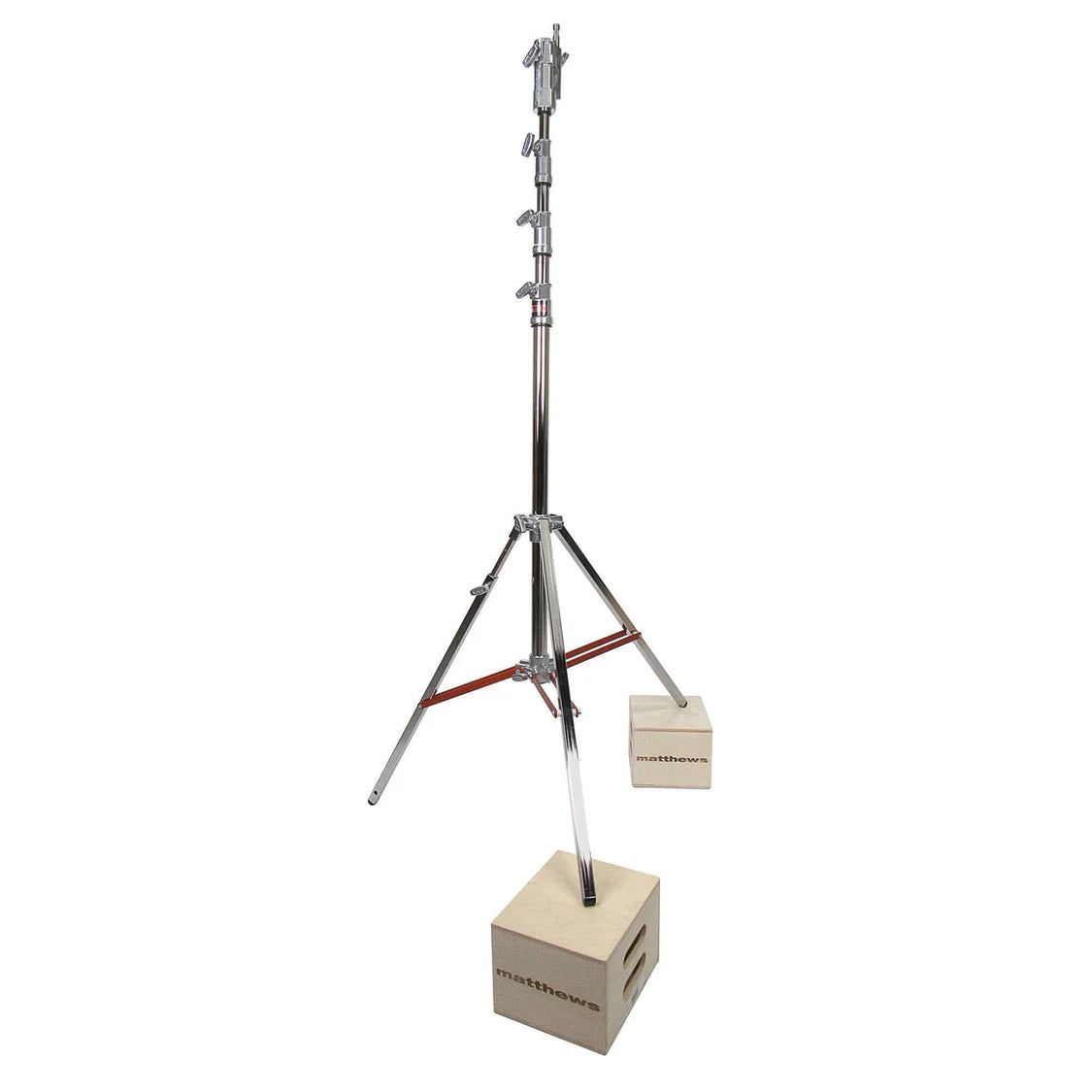
Combo stands are necessary when production requirements exceed the height or load capacity of standard C-stands. These supports are designed for heavy lighting fixtures and overhead rigs. While they are less portable than C-stands and require more time to reposition, they are essential for studio environments. A small inventory of tall combo stands ensures you can accommodate high-output lighting requests without over-investing in specialized gear. For clients requiring significant height, the triple-riser combo stand is a standard industry evaluation point.
Side-by-Side: Five Grip Stand Kits Compared
| Kit | Configuration | Price (CAD) | Parts and repair profile | Fleet role |
|---|---|---|---|---|
| Matthews 100 cm Double Riser | Double riser, spring-loaded base | $425.00 | Grip heads and knobs are wear items; spring-loaded base reduces lifting effort | General fleet |
| Matthews 50 cm Sliding Leg | 50 cm main, 2 risers, sliding leg | $335.00 | Sliding-leg channel needs regular grit checks | Tight spaces |
| Matthews 100 cm Sliding Leg | 100 cm arm, sliding leg | $375.00 | Sliding leg requires cleaning to prevent seizing | Location work |
| Matthews Century C+ Turtle Base | Removable turtle base, 100 cm arm | $415.00 | Removable base adds a connection point; base separates for packing | Transport density |
| Avenger Fixed Base 100 cm Kit | 3-section, 2 riser, sliding leg | $399.95 | Non-welded sliding base allows for casting replacement | Durability |
Price (CAD)
Grip Stand Maintenance Checklist for Rental Inventory
Failures in grip equipment are often predictable. Incorporate maintenance into the return process to catch wear before it results in a failure on set. According to Canadian Centre for Occupational Health and Safety guidelines, preventive maintenance is the most effective way to ensure workplace safety.
- Test every locking knob and collar through its full range of motion.
- Check grip head tension and confirm both mounting holes are clear of debris.
- Inspect leg castings and welds for stress cracks.
- Confirm the sliding leg moves freely along the riser channel.
- Wipe down chrome surfaces to check for corrosion or pitting.
- Verify the arm locks securely at every angle.
- Count and inspect sandbags for leaks or handle damage.
Inspection Points Before Every Rental Out
Test grip head tension by hand before every departure. Failure to check the sliding-leg channel on stands used for location work is a common oversight; grit in the riser channel often leads to seized legs, rendering the stand ineffective on uneven ground.
Common Failure Points
- Grip heads: The tension mechanism degrades with repeated use. Keep replacement heads in stock to avoid retiring entire stands.
- Locking knobs: These components can strip under excessive force. Replace them immediately if threading becomes difficult.
- Sliding-leg channels: Grit and lack of lubrication cause binding. If the channel is not bent, cleaning and re-lubrication usually resolve the issue.
- Leg castings: Cracks in these areas are safety hazards. Prioritize stands with replaceable castings over welded designs.
Rental Equipment Fleet Planning: How Many Stands and Which Mix
Base your fleet planning on actual rental data rather than generalized ratios. Industry data from Statista suggests that rental houses that align inventory with historical demand see higher use rates. A standard starting mix for a production rental house includes 60% C-stands, 20% turtle base models, 15% combo stands, and 5% specialty stands.
Building Your Grip Stand Order With Walter Lighting & Grip
Effective fleet management balances durability with the specific needs of your client base. Walter Lighting & Grip provides professional-grade lighting and grip equipment, including the Matthews and Avenger kits identified in this guide. We offer the components necessary to maintain your inventory, ensuring your equipment remains reliable for every production cycle. Get started with Walter Lighting & Grip to build a fleet that meets professional standards.
Frequently Asked Questions
What types of grip stands are most useful for film productions?
C-stands and combo stands are essential. C-stands manage flags and small modifiers, while combo stands support heavier lighting fixtures. A balanced fleet typically prioritizes C-stands due to the frequency of their use in grip departments.
What is the difference between a C-stand and a combo stand?
A C-stand uses a staggered leg design for nesting and includes a grip arm. A combo stand is designed for higher load capacities and greater height, making it suitable for larger lighting units.
What should rental companies inspect on a grip stand?
Inspect locking handles, riser sections, and grip head tension. Check leg castings for cracks and ensure the sliding leg mechanism is free of debris. Regular maintenance logs help identify stands that require retirement.
How many grip stands should a rental package include?
Fleet size should be determined by historical rental demand. Analyze which items have the highest turnover to inform future purchasing decisions.
