

How to Choose the Best Safety Wire for Camera Rigging
Quick Summary
A safety wire is a secondary retention device that holds a light, camera or accessory in place if the primary clamp, mount or pipe connection fails. Choose one by matching its rated load to the fixture weight, including accessories, and its length to the distance from the attachment point.
- Weigh the fixture with its accessories, barndoors, gels and cable, before choosing a wire rating.
- Treat the rated load as a ceiling, not the wire's breaking strength.
- Measure the distance from the attachment point to the fixture to set the wire length.
- Avoid wires with no stated load rating for overhead camera rigging.
- Inspect wires for fraying, kinks, cracked crimps and hook problems, and retire any that caught a fall.
Table of Contents
- What a Safety Wire Does on a Camera Rig
- Camera Rigging Safety Cable Load Rating and Safety Factors
- Overhead Rigging Safety Cable Length: Matching Wire to Your Setup
- Wire Tie for Camera Rigging: Attachment Methods Across Rig Configurations
- Comparing the Best Safety Wires: Walter Lighting & Grip Options
- Standards, Certification and Selection by Environment
- Safety Cable Inspection and When to Retire a Wire
- Choosing Your Safety Wire for the Next Shoot
- Frequently Asked Questions
What a Safety Wire Does on a Camera Rig
Last Updated: November 19, 2026
A safety wire is a secondary retention device. It holds a light, camera or accessory in place if the primary clamp, mount or pipe connection fails. Crews often ask which safety wire to use, and how to know it will hold. The answer starts with understanding what the wire is actually for.
Safety wires do not carry the load during normal operation. The primary attachment does that job. The wire waits in reserve, ready to catch the fixture if something gives way. Think of it as insurance that you hope never gets used.
That distinction matters when you choose a wire. A safety wire that is too light for the fixture it secures will snap under a sudden drop. One that is too heavy adds bulk and can interfere with how the rig is built. Matching the wire to the job is the first decision to get right.
Camera Rigging Safety Cable Load Rating and Safety Factors
Load rating tells you how much weight a wire can hold. Safety factor tells you how much margin sits above that rating. Both matter.
The Kupo 100cm Safety Wire 4.8mm SW-03 is rated for 50kg (110lbs). The Kupo 75cm Safety Wire 3.2mm SW-01 is rated for 10kg (22lbs). The Kupo 70cm Safety Wire 3.0mm with PVC jacket is rated for 5kg (11lbs). These are very different capacities, and choosing the wrong one for the fixture weight is a common mistake.
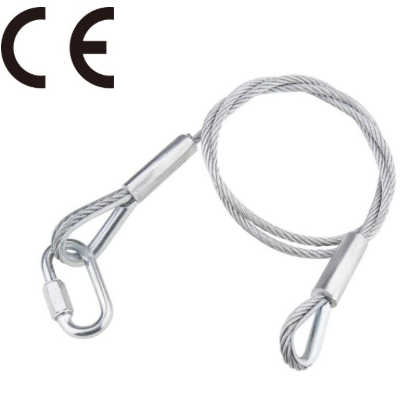
Load rating is not the same as breaking strength. A wire rated at 10kg is not designed to be loaded to its breaking point. Use the rated figure as your ceiling, and always weigh the fixture with its accessories before you choose a wire.
Watch out: many crews size the wire to the lamp body and forget the barndoors, gels and cable weight. Add those in before you pick a rating.
Overhead Rigging Safety Cable Length: Matching Wire to Your Setup
Length determines how much slack the wire has when the fixture is in its working position. Too short, and the wire pulls tight and may stress the attachment point. Too long, and the wire can swing or tangle if the fixture drops.
Available lengths for these products range from 70cm to 100cm. The 70cm wire suits compact rigs where the fixture sits close to the pipe. The 100cm wire suits larger rigs or setups with more distance between the fixture and the secure point.
Measure the actual distance from the attachment point to the fixture before you order. Leave enough slack to move the fixture, but not so much that the wire can fall away from its intended path.
The Avenger 100cm safety cable is rated for 30 kg (66 lb.) payload when set properly and statically loaded. It has a 4 mm diameter and includes a locking carabiner, so check that its length suits your rig before you buy.
Wire Tie for Camera Rigging: Attachment Methods Across Rig Configurations
How the wire attaches depends on the rig. A wire wrapped around a pipe clamp is different from one clipped to a eyebolt or threaded through a grid point.
For most lighting setups, the wire loops around the pipe or truss, then clips back onto itself with a spring hook or locking carabiner. The Fehr Bros. 1/8" x 30" cable, for example, is secured around a pipe or truss, then clipped on itself with its spring clip.
For camera rigs, attachment often means a secondary point on the cage or mount. Choose a wire with a hook or carabiner that fits your rig's attachment point. A hook that is too large will not seat properly. One that is too small may slip.
Always confirm that the attachment point itself is rated for the load. The wire can only protect as well as the hardware it connects to.
Comparing the Best Safety Wires: Walter Lighting & Grip Options
Here is how the wires we carry compare on the specifications that matter for camera rigging.
| Product | Length | Diameter | Rated Load | Hook Type | Price (CAD) |
|---|---|---|---|---|---|
| Kupo 70cm Safety Wire 3.0mm PVC | 70cm | 3.0mm (PVC coated) | 5kg (11lbs) | Spring hook | $8.00 |
| Fehr Bros. 1/8" x 30" 7x7 | 30" | 1/8" | Not stated | Spring hook | $10.95 |
| Kupo 75cm Safety Wire 3.2mm SW-01 | 75cm | 3.2mm | 10kg (22lbs) | Spring hook | $17.00 |
| Kupo 100cm Safety Wire 4.8mm SW-03 | 100cm | 4.8mm | 50kg (110lbs) | Locking hook | $17.00 |
| Avenger Safety Cable 100cm 4mm | 100cm | 4mm | 30 kg (66 lb.) payload | Locking carabiner | $59.95 |
Price (CAD)
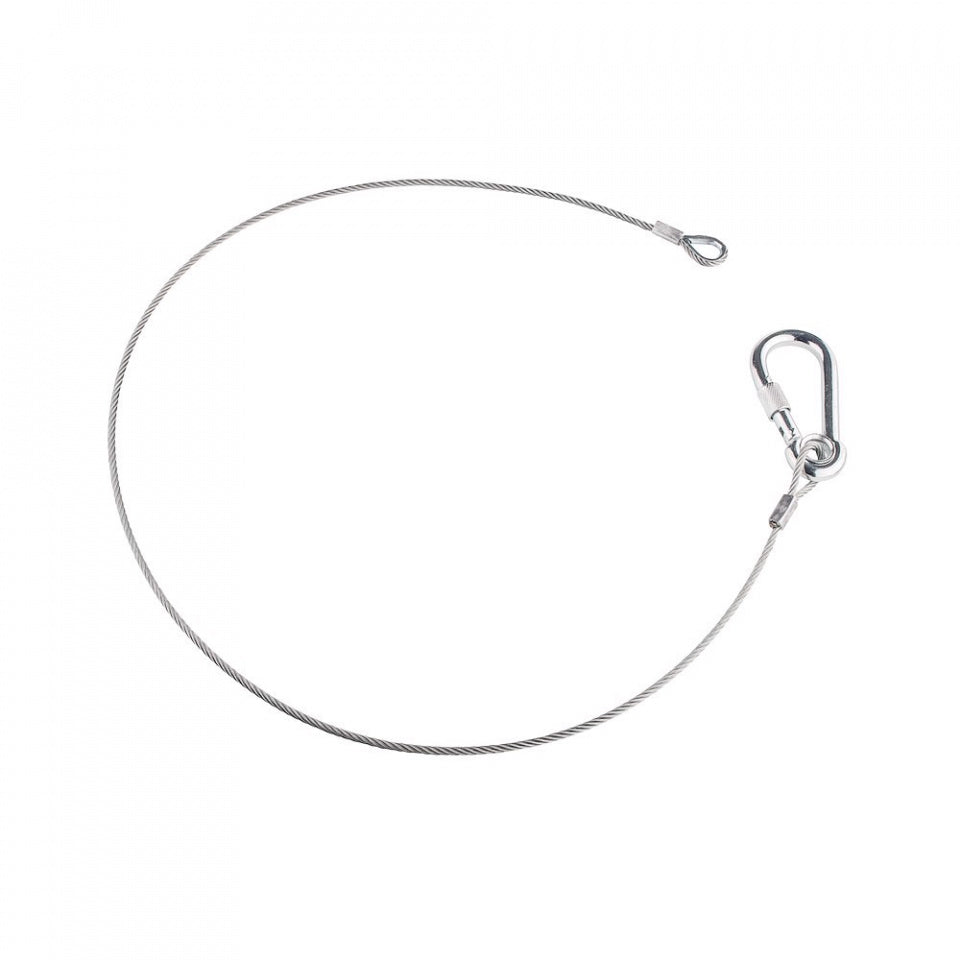
Best for light fixtures: The Kupo 70cm 3.0mm PVC wire suits small LED panels and lightweight fixtures. The PVC jacket protects the fixture and bracket from scratches.
Best for heavier fixtures: The Kupo 100cm 4.8mm SW-03 carries the highest rated load in this group at 50kg. It suits larger fixtures and heavier accessory loads.
Best for mid-weight rigs: The Kupo 75cm 3.2mm SW-01 sits between the two, with a 10kg rating and a spring hook.
Best for locking security: The Avenger 100cm cable uses a locking carabiner and works with clamps and couplers for added overhead security.
Price should not decide this choice alone. A cheaper wire that is under-rated for your fixture is a false saving.
Working Load Limit vs. Breaking Strength
The rated load in the table is a working load limit, not a breaking strength. The working load limit is the maximum load the manufacturer intends the wire to hold in service. Breaking strength is the load at which the wire or its terminations fail. The ratio between the two is the safety factor. Use the rated load as your ceiling and keep a margin below it.
Watch out: a wire with no stated load rating, such as the Fehr Bros. 1/8" x 30" 7x7 in this table, cannot be sized against a known fixture weight. Treat an unrated wire as unsuitable for overhead camera rigging unless the manufacturer provides a documented rating.
How to Verify a Rating Before You Buy
Ask for the manufacturer's product data sheet or catalog page that states the working load limit and the intended use. Check that the rating applies to the wire as sold, including its terminations, hooks and carabiners, not just the cable strand. Confirm the hook or carabiner has its own marked rating, because the assembly is only as strong as its weakest component. If a supplier cannot produce a documented rating, choose a different product. For camera rigs, a wire with a verified rating and a locking connector is worth the higher price over an unrated wire with a spring hook.
Standards, Certification and Selection by Environment
Look for certification marks on the product. Check the product listing for any certification marks and confirm with your production safety officer which standards apply on your set.
Ask your production safety officer which standards apply before you buy.
A Documentation Checklist for Camera Rigging Wires
Before a wire goes into service on a camera rig, confirm the following from the manufacturer's documentation:
- The working load limit is stated for the complete assembly, including hooks and carabiners.
- The intended use covers overhead retention of equipment, not just general tie-down.
- The hook or carabiner has a marked rating that meets or exceeds the wire's rating.
- The manufacturer provides inspection and retirement guidance.
- The product has a traceable model number so you can retrieve the data sheet later.
If any of these items is missing, treat the wire as unverified and do not use it for overhead camera rigging.
Selection by Environment and Use Case
Indoor studio work on a controlled grid differs from outdoor location work where wind and moisture add risk. The PVC jacket on the 3.0mm Kupo wire protects against scratches, which matters on sets where equipment is moved frequently.
For wet or corrosive environments, prefer a wire with a galvanized or coated strand and a locking connector that will not seize. For temporary setups that are rigged and struck repeatedly, inspect the hook gate and the crimp at each end before every use. For long-term installations, follow the manufacturer's inspection interval and keep the data sheet on file. Match the wire to the environment and the duty cycle, not just the fixture weight.
Safety Cable Inspection and When to Retire a Wire
A safety wire that has been overloaded, dropped or kinked can weaken without showing obvious damage. Inspect each wire before use.
Look for fraying, kinks, flattened sections, broken strands and corrosion. Check the ferrule or crimp at each end for cracks or looseness. Test the hook or carabiner gate for smooth closure and secure locking.
Retire a wire if you see any of these signs, or if it has caught a falling fixture. Replace a damaged wire rather than repairing it.
Choosing Your Safety Wire for the Next Shoot
Start with the fixture weight, including accessories. Pick a wire rated above that figure, with margin. Measure the distance from the attachment point to the fixture to set the length. Match the hook or carabiner to your rig's attachment point. Confirm that the attachment hardware is also rated for the load.
Then inspect the wire before every shoot and replace it at the first sign of wear. Walter Lighting & Grip carries the safety wires listed above, across several load ratings and lengths. Choose the wire that fits your rig, not the cheapest one on the shelf.
Frequently Asked Questions
What is a safety wire used for in camera rigging?
A safety wire is a secondary protective device that catches a camera, light or accessory if the primary mount or clamp fails. On overhead rigs it prevents equipment from falling onto crew or cast. Most stage rigging applications treat safety cables as mandatory, because they add a fallback layer when the main attachment gives way. Pair the wire with a clamp or eyebolt at every rigging point, and check that the wire is rated for the weight it will hold.
How do you choose a safety cable for a camera rig?
Start with the weight of the heaviest item you will secure, then pick a wire with a load capacity above that figure. Walter's KUPO 100cm Safety Wire SW-03 is rated for 50kg (110lbs), while the KUPO 70cm SW-02 is rated for 5kg (11lbs). Match the length to the distance between the attachment point and the fixture, and choose a locking hook or spring hook that suits your clamp. Check that the wire carries a CE mark where the manufacturer lists one.
How often should safety wires and their attachments be inspected?
Inspect safety wires before every rig and after any incident where equipment was dropped or stressed. Look for kinked strands, broken wires, corrosion on the galvanized steel, damaged ferrules and deformed hooks. Check the PVC jacket on coated wires for cuts that could expose the steel. Retire any wire that shows damage, and never reuse a wire that has caught a fall. Keep a simple log for the production so every wire has a known inspection date.
Can you use a regular cable as a rigging safety?
A regular cable is not built for overhead loads and is not a substitute for a rated safety wire. Use only safety wires with a stated load rating for overhead lighting and camera rigs. Check the product listing before you buy.
