

Film Equipment Rental Industry Trends 2026
Table of Contents
- Film Equipment Rental Industry Trends 2026: What's Changing
- Are Light Meters Worth It for Digital Cinematography
- How Film Production Equipment Tracking Software Reshapes Rental Operations
- Benefits of Renting vs Buying Film Equipment
- Sustainability and Green Production in Equipment Rental
- Supply Chain and Inventory Management in Film Equipment Rental
- Frequently Asked Questions
Last Updated: September 10, 2026
Film Equipment Rental Industry Trends 2026: What's Changing
The film equipment rental industry trends 2026 point to a market in transition, where rising production volumes meet tighter capital budgets and a growing preference for access over ownership. This shift plays out daily across lighting, grip, and photography supply. Rental houses that once competed purely on inventory size now compete on logistics, tracking accuracy, and how fast they can get the right kit to a set.
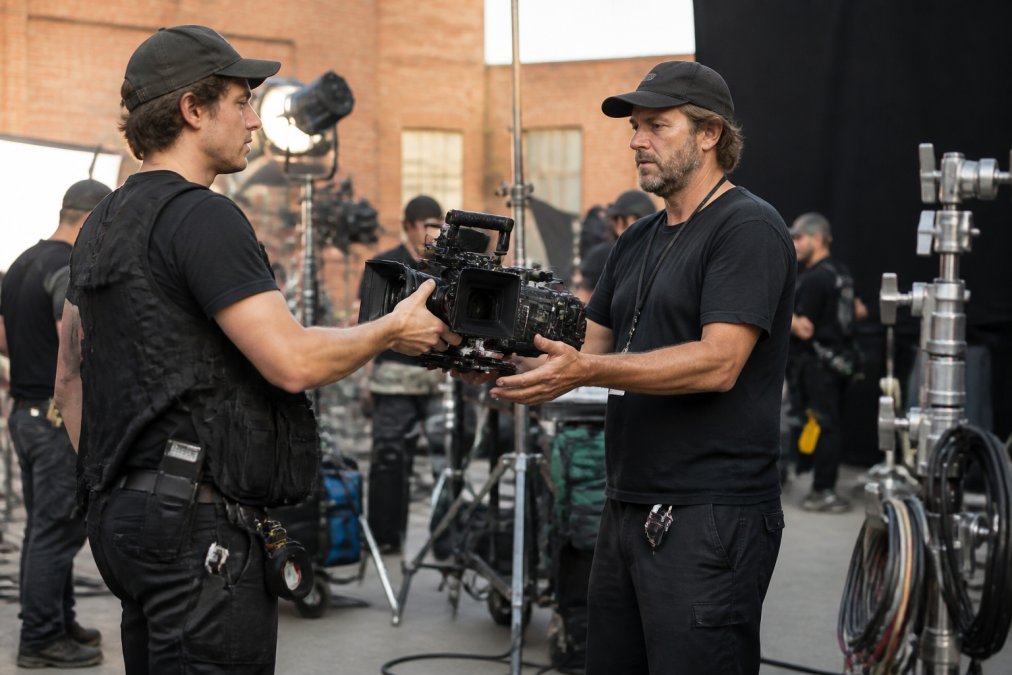
This guide breaks down what is actually changing, from market valuation and CAGR forecasts to the operational software reshaping how gear is tracked. Below, we cover the trends that matter most to rental managers, gaffers, and independent creators planning their next production.
Market Valuation and Growth Forecast
Industry forecasts generally describe steady expansion rather than explosive growth. Analysts tracking the sector point to rising content demand from streaming platforms, broadcasters, and commercial houses as the primary driver of rental demand, while capital expenditure constraints push more productions toward renting rather than buying. According to industry analysis reports, the compound annual growth rate (CAGR) figures vary by source and region, so treat any single number with caution. What matters operationally is the direction: more productions, shorter shoot windows, and a wider range of equipment types in circulation. That combination rewards rental houses with strong asset tracking and penalizes those running on spreadsheets.
Technological Advancements in Production Equipment
Digital cinema cameras, high-definition optics, and lighting and grip systems evolve faster than most rental houses can depreciate them. Each new sensor generation resets what a "current" production kit looks like, and equipment that was flagship two years ago can sit idle. This pace creates a real problem. Technological obsolescence hits rental inventory harder than almost any other asset class, because a camera body that no longer matches what directors request stops earning (research on asset depreciation(https://www.nber.org/system/files/working_papers/w29504/w29504.pdf)). Rental houses manage this by rotating stock earlier, keeping older bodies as B-camera or backup units, and tracking use per item rather than per category.
For productions, the upside is access to current gear without the depreciation risk. For rental managers, the discipline is knowing which items still earn and which are quietly draining shelf space.
Are Light Meters Worth It for Digital Cinematography
Yes, light meters remain worth it for digital cinematography, though the reasons have changed. Modern digital cinema cameras have excellent built-in monitoring, but a meter still gives you a consistent, camera-independent reference for exposure and lighting ratios that on-set monitors cannot reliably provide. The practical case comes down to three things:
- Consistency across cameras. Multi-camera setups need a shared exposure reference, and a meter provides one that does not depend on a specific camera's monitoring tools.
- Lighting ratios. Shaping a scene means controlling the relationship between key, fill, and background. A meter measures that relationship directly.
- Repeatability. Matching a look across shoot days or reshoots is far easier when you have measured values rather than eyeballed ones.
What most guides miss is that the meter's value depends on the workflow. On a fast commercial shoot with a single camera, a meter may sit in the bag. On a multi-camera narrative production, it earns its place every day. If you are coming from a purely monitor-based approach, expect a short adjustment period before the readings feel intuitive.
How Film Production Equipment Tracking Software Reshapes Rental Operations
Film production equipment tracking software changes rental operations by making every item's location, condition, and availability visible in real time. Instead of relying on memory and manual logs, rental managers can see exactly what is out, what is due back, and what needs maintenance before it goes out again. The operational gains show up in a few places. Asset tracking reduces lost and mis-shelved gear, which is one of the largest hidden costs in rental. Equipment lifecycle data tells you when an item is approaching the end of its useful earning life. And logistics management improves because dispatch and return are tied to the same system.
AI and Automation in Rental Logistics
AI is starting to move rental logistics from reactive to predictive. Rather than discovering a shortage when a production requests a kit, automated systems can flag likely conflicts in advance based on booking patterns and historical demand. In practice, this means smarter allocation of high-demand items, better scheduling of equipment maintenance between rentals, and fewer last-minute substitutions. It is not a replacement for an experienced rental manager. It is a tool that removes the repetitive coordination work so the manager can focus on the technical judgment that clients actually value.
Benefits of Renting vs Buying Film Equipment
Renting film equipment beats buying for most productions because it converts a large capital expenditure into a predictable operating cost, removes depreciation risk, and gives access to current gear without a long-term commitment. Buying only makes sense when use is high and consistent enough to justify ownership. Here is how the trade-offs compare:
| Factor | Renting | Buying |
|---|---|---|
| Upfront cost | Low, per-project | High capital expenditure |
| Depreciation risk | None | Borne by owner |
| Access to current gear | Immediate | Requires upgrade cycles |
| Maintenance | Provider's responsibility | Owner's responsibility |
| Best for | Short or variable shoots | High, steady use |
The decision usually comes down to how often you shoot and how fast the gear you need changes. For most independent productions, the answer is renting.
Cost-Benefit Analysis for Independent Creators
Independent creators face the sharpest version of this decision. A documentary or short film may need a specific camera, a lighting package, and grip support for a handful of shoot days. Buying that kit means carrying depreciation, storage, insurance, and maintenance for the rest of the year. Renting shifts all of that to the provider and keeps the budget tied to the project. The trade-off is that rental costs recur with every shoot, so a creator shooting continuously may eventually cross the point where ownership is cheaper. For most independents, that crossover is rare, because the gear they want keeps changing. Rental also lets a small production look larger than its budget, since a modest spend can put current, well-maintained equipment on set.
Sustainability and Green Production in Equipment Rental
Sustainability is becoming a selection criterion, not a footnote. Productions are increasingly asked to account for their environmental footprint, and equipment rental fits that goal directly by extending the working life of gear that would otherwise be replaced on a short ownership cycle (information on circular economy(https://www.epa.gov/circulareconomy/what-circular-economy)). Rental reduces waste in a straightforward way: one well-maintained lighting or grip package serves many productions instead of sitting idle in a single owner's storage. That shared use is the core environmental argument for rental, and it aligns with broader industry pressure to reduce the footprint of production.
For rental houses, the practical response is to document equipment lifecycle, maintain gear properly to extend service life, and be able to tell clients where their kit comes from. Productions that report on sustainability will ask.
Supply Chain and Inventory Management in Film Equipment Rental
Supply chain and inventory management decide whether a rental house can actually deliver on its promises. Long lead times on new equipment, limited availability of certain components, and market volatility in pricing all affect what a rental manager can stock and how quickly it can be replaced. The workable approach is to build depth in the items that are hardest to source and most in demand, and to keep maintenance schedules tight so existing inventory stays in service. Inventory turnover becomes the key metric: gear that sits unused is capital tied up, while gear that turns consistently funds its own replacement.
In practice, that discipline shows up in a few concrete habits:
- Track turns per item, not per category. A lighting package can look healthy in aggregate while two specific fixtures never leave the shelf. Item-level turnover exposes the dead weight a category average hides.
- Set reorder points by lead time, not by gut feel. If a commonly requested lens takes months to source, the reorder trigger has to fire earlier than for an item that can be replaced in a week.
- Keep a deliberate buffer on conflict-prone items. The gear most often double-booked is the gear worth holding one extra unit of, even at the cost of a lower overall turn rate.
- Separate earning stock from backup stock. Older bodies kept as B-camera or backup units should be tracked as a distinct tier so they are not counted against use targets they can never meet.
Market penetration depends less on having the biggest catalog and more on having the right items available when productions need them. That is an inventory discipline problem, and tracking software is what makes it manageable.
Frequently Asked Questions
How is the film equipment rental industry evolving in 2026?
The film equipment rental industry in 2026 is shaped by three shifts: AI-driven logistics that cut asset tracking time, growing demand for sustainable production practices, and a rise in flexible rental models over outright ownership. Rental houses are adapting by improving inventory turnover and operational efficiency. Independent creators and broadcast clients alike are driving market penetration for short-term, scalable rental solutions.
What are the benefits of renting versus buying film equipment?
Renting avoids capital expenditure and depreciation on gear that faces technological obsolescence within a few years. It also reduces equipment maintenance and storage costs, letting production companies scale their production kit per project. Buying makes sense when a specific item is used on back-to-back shoots and its equipment lifecycle justifies the upfront cost. For most independent creators and documentary crews, renting offers cost-effective production without locking up budget in idle gear.
How does equipment tracking technology impact rental efficiency?
Film production equipment tracking software uses various technologies to show exactly where every asset is at any moment. This can lead to fewer lost items, faster check-in and check-out, and better inventory turnover. Real-time visibility also supports logistics management across multiple shoot locations, reduces downtime from missing gear, and gives rental managers the data needed to forecast rental demand and adjust pricing dynamically.
Are light meters still relevant in the age of digital cinematography?
Yes. While digital cinema cameras offer built-in scopes and false color, a light meter gives cinematographers a precise, repeatable way to measure exposure ratios between key, fill, and background lights. This matters on multi-camera setups, green screen stages, and any shoot where lighting continuity across takes is critical. Many directors of photography still carry a meter as a backup and as a consistent reference when matching shots across different cameras or lighting conditions.