

Apple Box Sizes for Studio Production: A Comparison Guide
Quick Summary
The four standard apple box sizes are full, half, quarter and pancake, and each is a fraction of one full box. Because the sizes divide evenly, crews can combine them to reach almost any height for leveling, propping or seating on set.
- Full, half, quarter and pancake boxes are the four standard sizes, each a fraction of the full box.
- Two halves or four quarters make one full box, so the sizes stack and combine predictably.
- Use a full box for stable bases, halves for medium lifts, quarters for fine adjustment and pancakes for shimming.
- Keep heavy loads on the lowest level and build stacks low and wide to reduce toppling risk.
- Nesting sets save storage and transport space, while individual boxes suit crews buying only needed sizes.
Table of Contents
- What an Apple Box Is and Why Studios Rely on It
- Standard Apple Box Sizes and Dimensions Compared
- Apple Box Uses on Set: Matching Each Size to the Task
- Weight Capacity, Load Safety and Stacking Limits
- How Many Apple Boxes a Film Set Actually Needs
- Nesting Sets Versus Individual Boxes: Choosing Your Kit
- Stocking Your Grip Kit: Your Next Step
- Frequently Asked Questions
What an Apple Box Is and Why Studios Rely on It
Last Updated: November 11, 2026
An apple box is a simple wooden box used on film and video sets for leveling, propping, elevating and seating. Walter Lighting & Grip offers full, half and quarter apple boxes, so crews can match the box to the job. When you compare apple box sizes for studio production, the key point is that the four standard sizes are fractions of one full box, which lets them stack, nest and work together.
Grips use apple boxes constantly because they solve small problems fast. A box raises a light stand a few inches, lifts a camera for a better angle, or gives a talent a stable place to stand. Few tools earn their place on set as quickly.
Two halves make a full, and four quarters make a full. That fixed relationship is why a grip can plan a height with a handful of boxes instead of guessing.
Standard Apple Box Sizes and Dimensions Compared
Apple boxes are commonly made in standard sizes, and the full box is the reference point for the smaller ones.
Full, Half, Quarter and Pancake at a Glance
| Size | Common use | Height (approx.) |
|---|---|---|
| Full | Main leveling, seating, workbench | Tallest of the four |
| Half | Medium height boost, mounting platform | Half the full box |
| Quarter | Fine height adjustment | One quarter of the full box |
| Pancake | Smallest lift, shimming | One eighth of the full box |
Walter Lighting & Grip carries the full, half and quarter boxes individually, along with nesting sets that pack the smaller boxes into one unit. Check the listing for exact dimensions before you order.
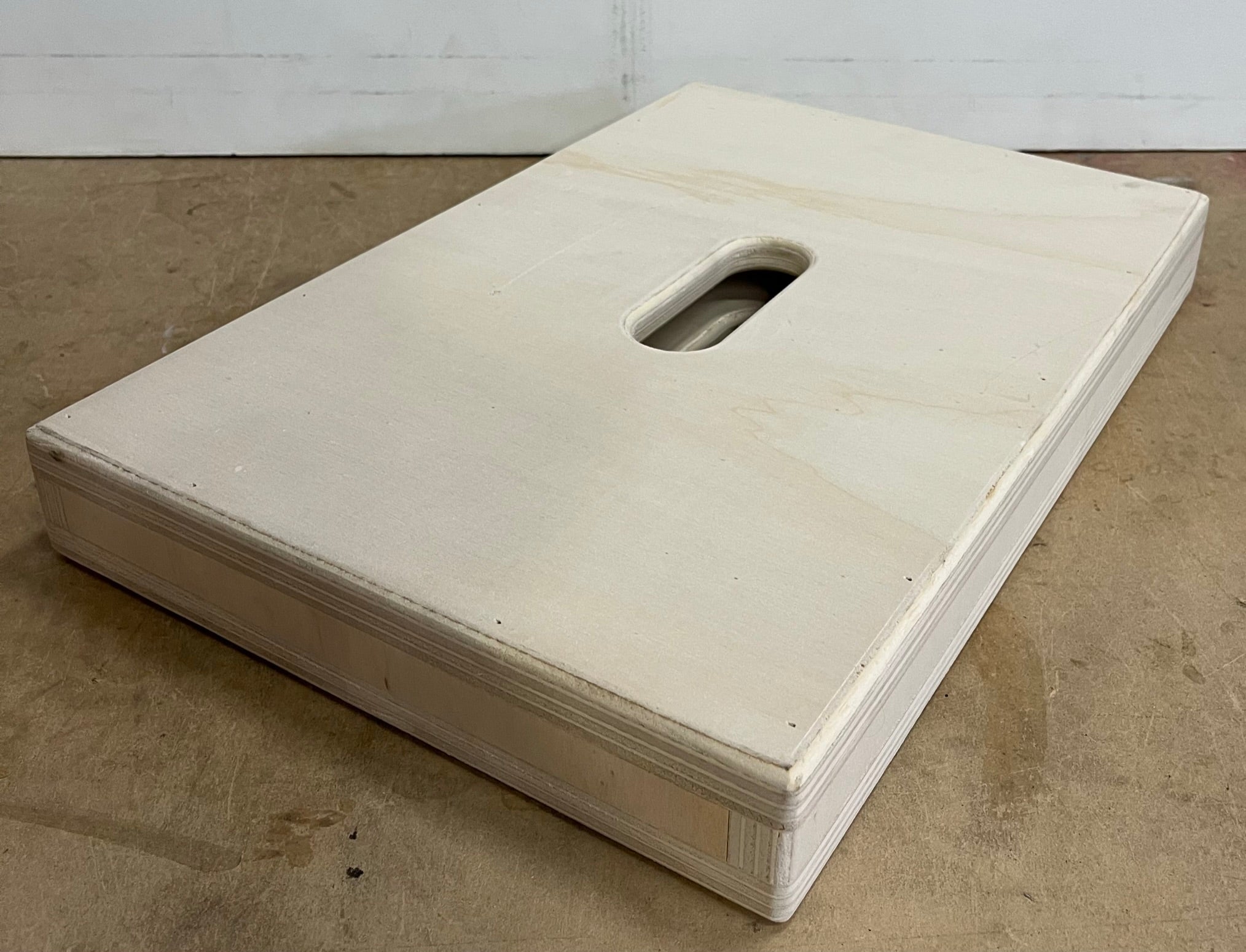
How Sizes Relate to One Another
Because the sizes are fractions, you can build almost any height from them. A full box plus a pancake gives a small step up, while two quarters and a pancake give a finer adjustment. Matching the stack to the real height needed is faster than improvising with random objects.
Apple Box Uses on Set: Matching Each Size to the Task
Choosing the right size depends on the job and on how the box will be loaded and handled. A full box is the workhorse for anything that needs a solid, stable base, such as a light stand footing, a seated operator or a short workbench. Halves cover the medium range, often as a mounting platform for a fixture or as a step for talent. Quarters handle fine height changes, and pancakes make the last small correction under a stand leg or a monitor.
Handling is part of the choice.
A typical sequence on a set shows how the sizes combine. A grip might place a full box to level a dolly track, then add a quarter to lift a fixture to the right height, and finish with a pancake to shim a stand leg that sits on a slight slope. Stop when the job is done rather than stacking more than the setup needs, because each extra level adds handling and stability risk.
Weight Capacity, Load Safety and Stacking Limits
Most sites list apple box dimensions and stop there, but weight and stability are what determine whether a box is safe under a light stand, a seated operator or a loaded cart. Manufacturers rarely publish a single load rating for apple boxes, and rated capacity varies with construction, wood species and whether the box is a solid build or a nesting unit. Treat any stated rating as a ceiling for a box on a flat, firm surface, not as a safe working load for a stack.
Before each shoot, inspect each box for cracks, splits and loose joints, and retire any box that has lost its stability.
Stacking changes the risk. A stack behaves differently from a single box because each level shifts the center of gravity upward and narrows the base. Keep the heaviest load on the lowest level, keep stacks low and wide, and avoid building towers taller than the stack's footprint allows. When a stack carries a light stand or camera, place the load over the center of the bottom box rather than near an edge.
Surface matters as much as the box. Soft ground, sloped floors, cable runs and uneven stage decking can each shift a stack. Level the surface first, then build up.
Watch out: a tall stack of small boxes can topple under a sudden knock, so keep stacks low and wide whenever someone is working nearby.
How Many Apple Boxes a Film Set Actually Needs
The right number depends on the size of the shoot, the number of lighting and camera setups, and how often the crew needs to raise or level equipment. A small production with one camera needs far fewer boxes than a large studio setup with multiple dollies and stands. Build your kit from the work you expect, then add spares for the sizes you use most.
Nesting Sets Versus Individual Boxes: Choosing Your Kit
A nesting set stores the half, quarter and pancake inside the full box, which saves a lot of space in a truck or a grip cart. The Kupo 4-in-1 Nesting Apple Box Set and the SHAPE Black Nesting Apple Box 4-in-1 both use this design, and the Kupo set has a removable side panel.
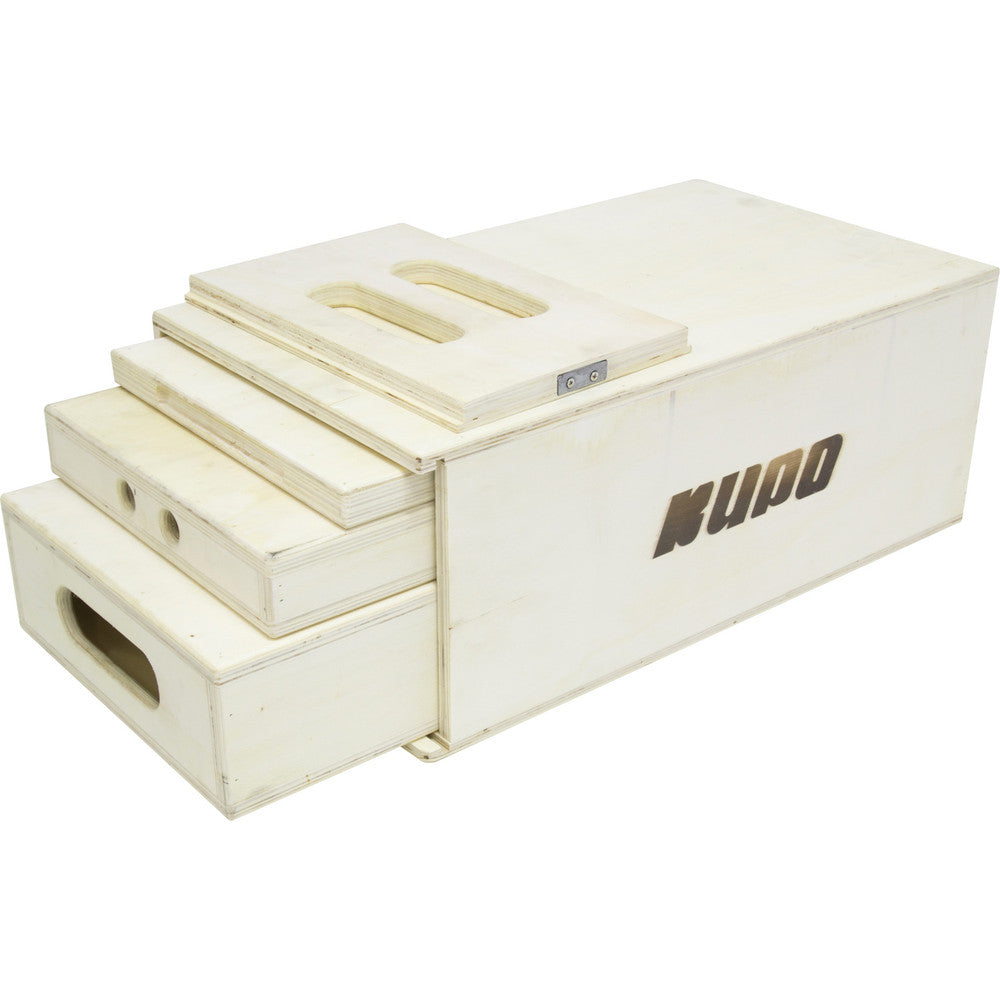
Individual boxes are often the better choice when you want to buy only the sizes you need, or when a single full box will cover most of your work. Nesting sets suit crews that move often and want one unit that covers every height.
Stocking Your Grip Kit: Your Next Step
Start with the sizes you use most, then add a nesting set if storage and transport are a challenge. Walter Lighting & Grip stocks the full, half and quarter apple boxes individually, along with the nesting sets, so you can build a kit that fits your shoots. Shop the range today and find the apple box that fits your next production.
Frequently Asked Questions
What are the standard apple box sizes?
The standard full apple box measures 20 by 12 by 8 inches. Half, quarter and pancake boxes are fractions of that full size: two halves make a full, and four quarters make a full. Walter Lighting & Grip stocks a full box at 18 by 12 by 9 inches, a half at 18 by 12 by 4.5 inches, and a quarter at 18 by 12 by 2.25 inches, so check listed dimensions when matching boxes across brands, since small differences affect how well they stack and nest.
How many apple boxes should a film set have?
Most sets build a kit around a mix of full, half, quarter and pancake boxes rather than a single size. A 4-in-1 nesting set such as the Kupo or SHAPE sets packs several box sizes into a single footprint.
Can apple boxes be stacked safely?
Apple boxes can be stacked, but stability depends on keeping the load centred and the boxes aligned. Inspect boxes for cracks or loose joints before each shoot, since damaged wood is the most common cause of a failed stack.
What is the difference between a full, half, quarter and pancake apple box?
The full apple box is the reference size and is useful for height and seating. Half boxes give a mid-level step, and quarters allow finer leveling. Choose the full box for platforms and seats, and the smaller sizes when you need to fine-tune height without overshooting. Using the right size for each job keeps setups faster and reduces the number of boxes you need to carry.
